
Retire technology securely — Get a Free Quote
Questions about retiring IT assets? 509-593-0590
Slate Peak lookout above the North Cascades, representing vigilance and secure technology stewardship
BUSINESS IT ASSET DISPOSITION & ELECTRONICS RECYCLING

Securely & Responsibly Retire Technology.

Get a Free Quote

Retire your technology with confidence. Slate Peak provides secure pickup, documented chain of custody, and data sanitization or destruction—helping businesses protect sensitive information and remain in compliance while giving used equipment a second life through responsible reuse and recycling. Help us keep electronics out of landfills.

See How It Works
✓Documented chain of custody
✓NIST-aligned data sanitization
✓Responsible recovery & recycling
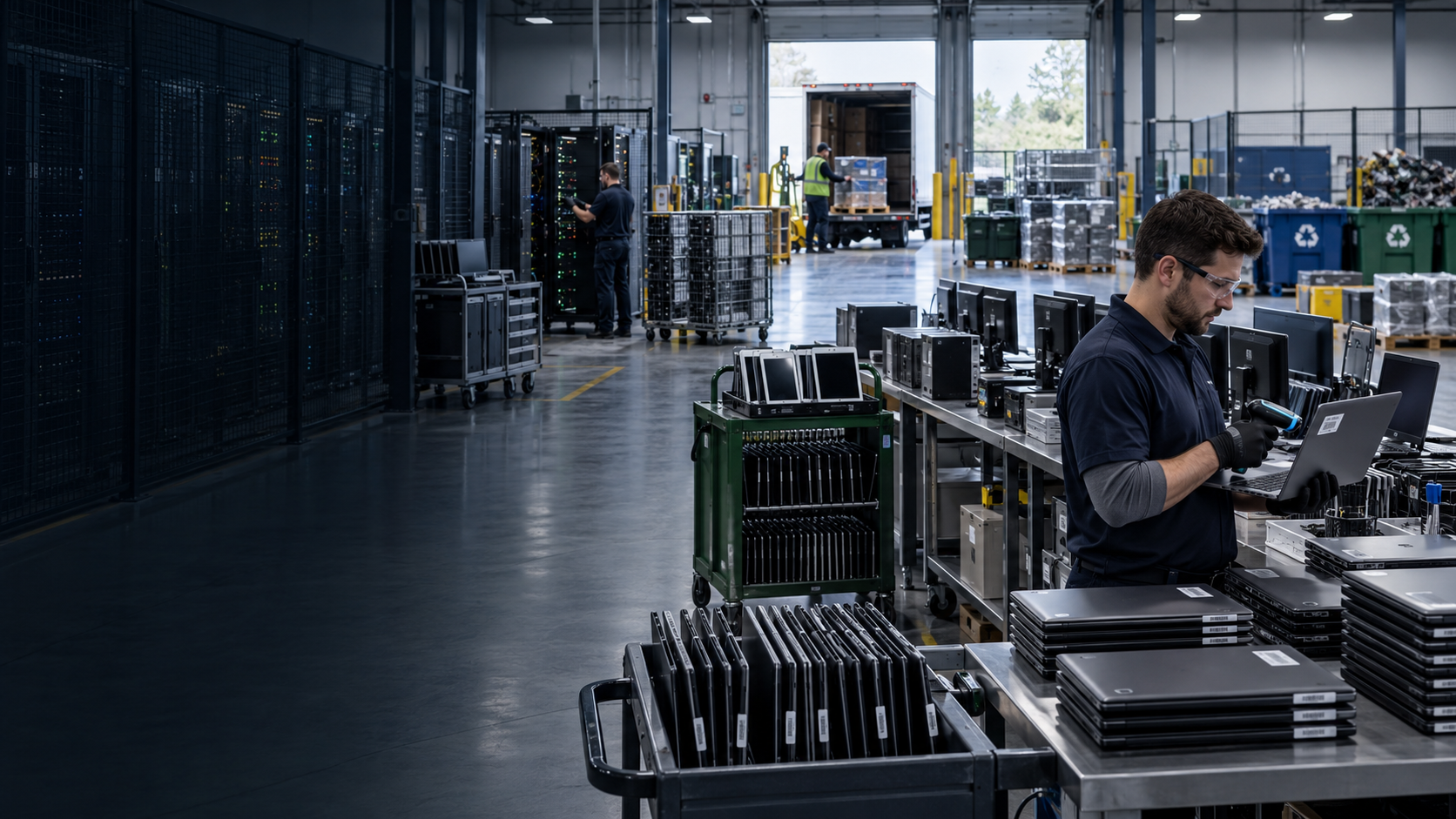
Technicians scanning and processing servers, laptops, and other retired technology in a secure ITAD facility
SECURE / SAFE IT ASSET DISPOSITION

Retired technology shouldn’t become tomorrow’s risk.

Whether you’re refreshing a few laptops or retiring an enterprise data center, every device can hold sensitive information and recoverable value.

Slate Peak manages the entire disposition process with documented custody, verified data sanitization, responsible recycling, and clear reporting—so your team can move forward with confidence.

01Every asset tracked
02Data handling secure & documented
03Value recovered when practical
Get a Quote Now
THE SLATE PEAK STANDARD

Accountability at every step

documented
controls
Protection & reporting
Basic disposal
Slate Peak
Serialized asset inventory
—
✓
Documented chain of custody
—
✓
Verified data sanitization
—
✓
Testing & asset recovery
—
✓
Responsible downstream recycling
—
✓
Final disposition reporting
—
✓
Built for businesses, schools, healthcare, research, and enterprise IT teams.
How it works

One accountable process from pickup to final report

Slate Peak manages retired technology as a controlled data-security and asset-recovery project—not simply as electronics recycling. Every step is planned, tracked, and documented.

01

Plan & Pickup

We define the project before any equipment moves, then create a documented transfer of custody at pickup.

Scope the projectWe review locations, asset types, estimated quantities, access, timing, data-security rules, resale eligibility, and required reporting.
Build the manifestA unique project and pickup record connects the customer, site, shipment, pallet or container, authorized contacts, and handling instructions.
Transfer custodyAssets are securely loaded, counted, signed over, and transported by Slate Peak or an approved carrier using the agreed chain-of-custody controls.
Receive & reconcileEach asset receives a Slate Peak tracking ID linked to its manufacturer, model, serial number, customer, project, and container.
Project outputPickup receipt, manifest & custody record
02

Data Sanitization

Data-bearing devices are identified, controlled, and processed according to customer-approved media rules.

Identify every driveDevice and media serial numbers are linked so the sanitization result follows the correct asset throughout processing.
Sanitize or destroyMedia is securely erased using an appropriate Clear or Purge method aligned with NIST SP 800-88, or physically destroyed when required. Onsite or witnessed processing can be planned for customer-specific needs.
Control exceptionsFailed, locked, damaged, or unrecognized media is quarantined for retry, escalation, or approved destruction—never silently passed downstream.
Verify & documentMethod, result, asset and media identifiers, exceptions, and final outcome are retained for audit-ready customer reporting.
Project outputSanitization or destruction records
03

Recovery & Recycling

After data risk is resolved, we pursue the highest responsible outcome for each asset and document where it went.

Test, grade & valueReusable equipment is evaluated by configuration, function, cosmetic condition, market demand, and expected recovery cost.
Recover useful valueQualified assets may be reused, refurbished, remarketed, or harvested for parts under the ownership and value terms agreed for the project.
Recycle responsiblyNon-recoverable equipment and materials are routed to qualified downstream processors appropriate to the material and required disposition.
Close the loopInventory reconciliation, final disposition, environmental records, and any agreed service offset or revenue settlement are delivered together.
Project outputDisposition report & project reconciliation
Frequently asked questions
Questions about retiring IT assets?
General
Data security
Logistics
Asset recovery
Recycling
Reporting
What is IT asset disposition?
assurix-blue-arrow

IT asset disposition, or ITAD, is the secure process of collecting, tracking, sanitizing, recovering value from, and responsibly recycling retired business technology - keeping technology out of landfills.

What types of equipment do you accept?
assurix-blue-arrow

We handle common business technology including computers, laptops, servers, storage devices, networking equipment, health and medical equipment, research & lab equipment, monitors, and related electronics.

Do you work with businesses of every size?
assurix-blue-arrow

Yes. Project requirements vary, but we can evaluate anything from a focused office refresh to multi-location or data-center equipment retirement.

How do we get started?
assurix-blue-arrow

Send us an approximate device count, equipment types, locations, timing, and data-security needs. We will review the project and outline the next steps.

How is pricing determined?
assurix-blue-arrow

Pricing depends on equipment volume, locations, logistics, labor, data-destruction requirements, reporting, and the condition and recoverable value of the assets.

How do you protect our data?
assurix-blue-arrow

Data-bearing assets remain under documented custody and receive controlled sanitization or destruction based on the project requirements and condition of the media.

What data-destruction methods are available?
assurix-blue-arrow

Options can include verified software sanitization, degaussing where appropriate, and physical destruction for media that cannot or should not be reused.

Will we receive proof of sanitization?
assurix-blue-arrow

Project reporting can document the asset, serial number, processing result, and final disposition, including recorded data-sanitization outcomes.

Can drives be physically destroyed?
assurix-blue-arrow

Yes. Physical destruction can be specified for failed media, high-security projects, or equipment that is not suitable for reuse.

Do you offer onsite data destruction?
assurix-blue-arrow

Onsite requirements can be evaluated during project planning. The recommended method depends on asset volume, security requirements, location, and available equipment.

How is equipment transported securely?
assurix-blue-arrow

Each project uses a documented pickup plan with identified personnel, equipment counts, controlled loading, and recorded transfer of custody.

Can you coordinate pickups outside your local area?
assurix-blue-arrow

Yes. Depending on the project, we can coordinate approved transportation options and establish custody requirements before equipment moves.

How should we prepare assets for pickup?
assurix-blue-arrow

We will provide project-specific instructions covering inventory, staging, cables and accessories, palletization or containers, access, and the authorized pickup contact.

What happens to equipment that still has value?
assurix-blue-arrow

Reusable equipment can be tested, graded, prepared for remarketing, or otherwise processed according to the customer agreement and project requirements.

Can recovered value offset service costs?
assurix-blue-arrow

When appropriate, recoverable value may be handled through an agreed service offset, purchase, revenue share, or standard disposition arrangement.

How do you determine an asset’s condition?
assurix-blue-arrow

Assets can be identified, inspected, tested, and graded using documented criteria appropriate to the equipment type and project scope.

Can we choose how recoverable value is handled?
assurix-blue-arrow

Yes. Ownership, service fees, asset value, and disposition terms should be agreed before processing begins so expectations are clear.

What happens to equipment that cannot be reused?
assurix-blue-arrow

Non-reusable equipment is directed to qualified downstream recyclers for responsible material recovery and disposition.

Do you prioritize reuse over recycling?
assurix-blue-arrow

Yes. When security, condition, and customer requirements allow, extending useful equipment life is generally preferable to immediate material recycling.

How do you manage downstream recyclers?
assurix-blue-arrow

Downstream partners are selected and documented based on the services they perform, the materials they receive, and project-specific requirements.

Can you document final recycling disposition?
assurix-blue-arrow

Final reporting can identify the processing path and disposition outcome for equipment handled under the project.

What information can appear in our asset report?
assurix-blue-arrow

Reporting may include manufacturer, model, serial number, assigned asset ID, data-bearing media, processing result, and final disposition.

Can reporting be customized?
assurix-blue-arrow

Yes. Required fields, file format, project references, location details, and other customer reporting needs can be defined during planning.

Will each asset have a unique tracking identifier?
assurix-blue-arrow

Assets can receive a unique Slate Peak tracking ID in addition to their manufacturer serial number, supporting custody and processing records.

When will final reports be delivered?
assurix-blue-arrow

Reporting timing depends on project size, testing, sanitization, recovery, and downstream processing. Expected timing is established during project planning.